- Home
- /
- Own Vineyards


Own Vineyards
Vineyard 77, Santa Juana
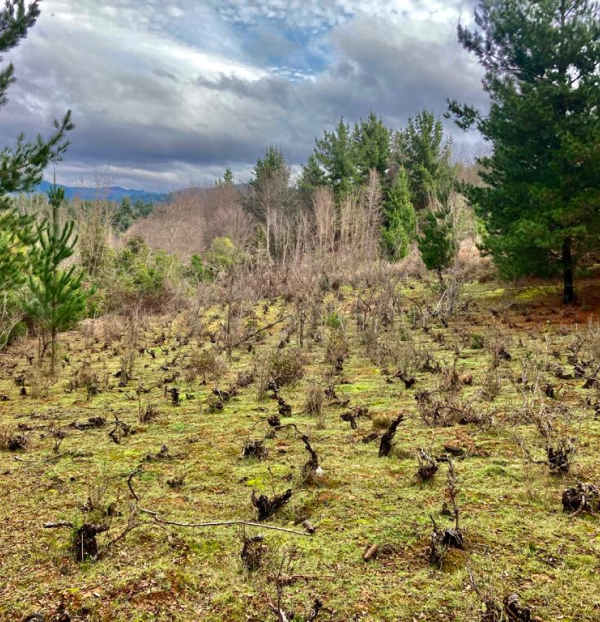
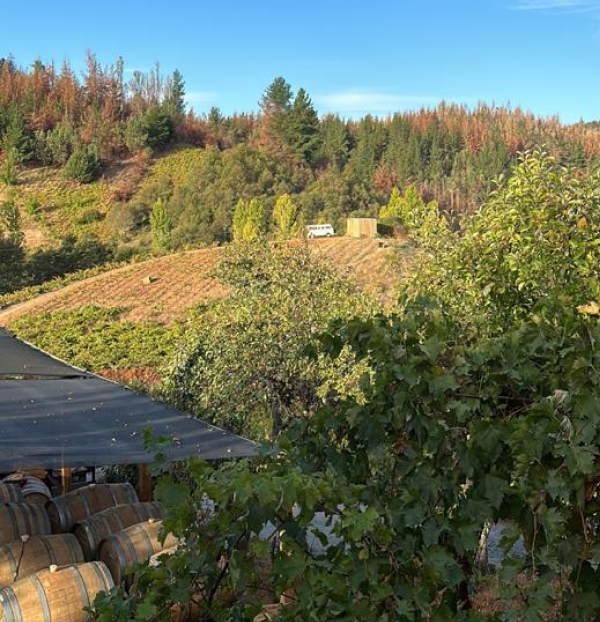
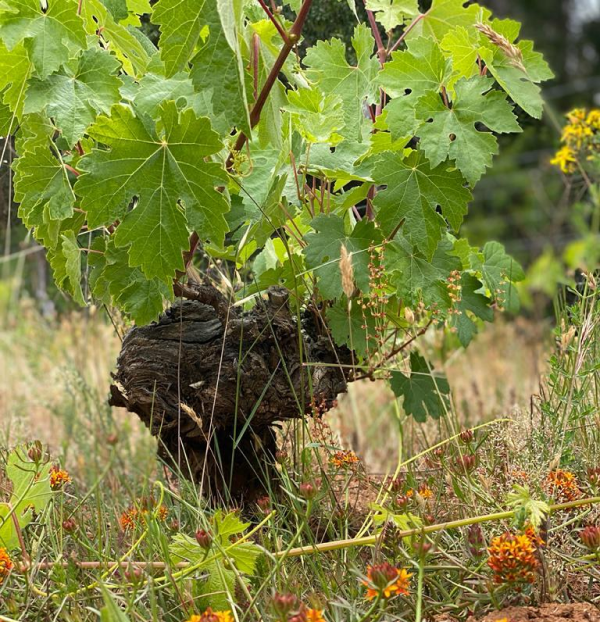
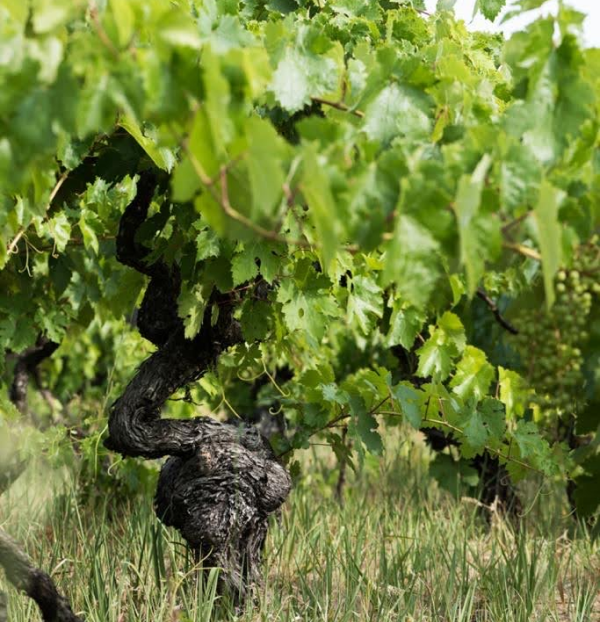
Vineyard 77 is the name that appears in the registration records of these vineyards in the BioBío Region and is an indication of their age. It is located in the El Venado sector, near Santa Juana, 70 kilometers from Concepción. It is a pleasant landscape, a hidden treasure in the midst of the prevailing forestry activity in the area. Wherever you look, the stimuli appear in thousands of shapes, colors and textures in every season of the year. A hill of grape vines of the country vine, forming a kind of pyramid, about two kilometers from the Biobío River. In the background we see oaks, boldos, maitenes and quillay. It is a sublime forest bordered by a small stream. Breathing expands, you can feel the scent of apple, plum, quince and lemon trees, the joy of pear, fig and murtilla trees that come out to meet. You can feel the energy of the soil... granitic, sedimentary and volcanic. A rugged soil, that even in the driest of years, holds with life and fragrance vines more than two hundred years old. This is the "Land of Cougars", from where the red country of the same name is born, home to trees and flowers that evoke the times when wildlife was the only prevailing and guarded by the cougar, the great king of Nahuelbuta.
Millapoa, Nacimiento
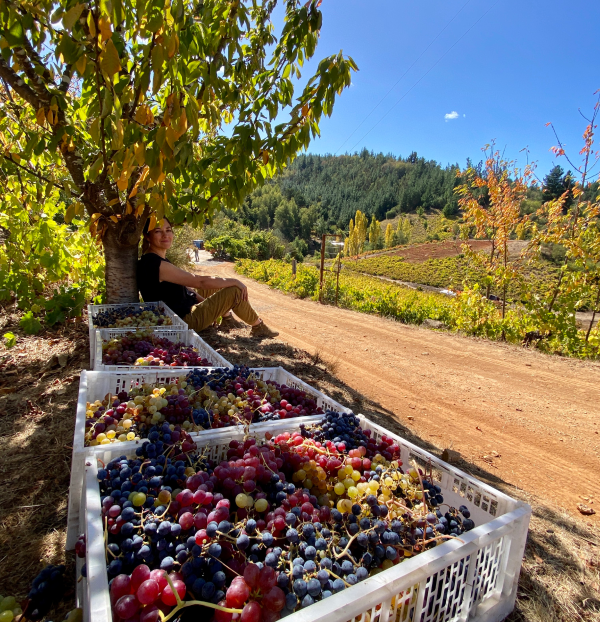
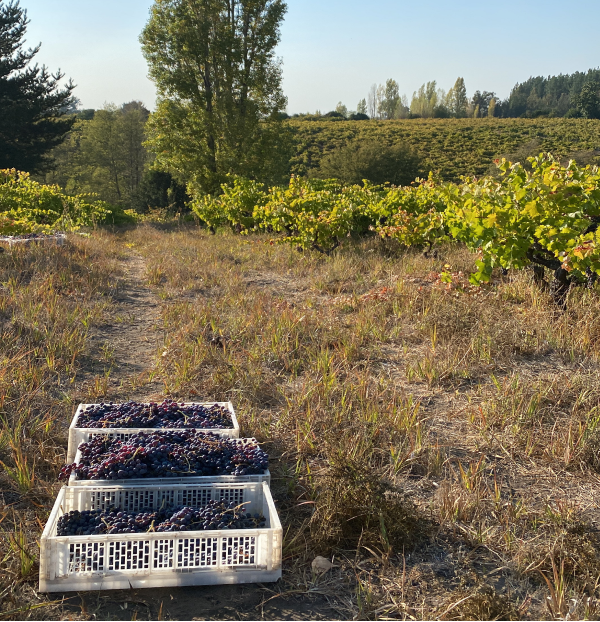
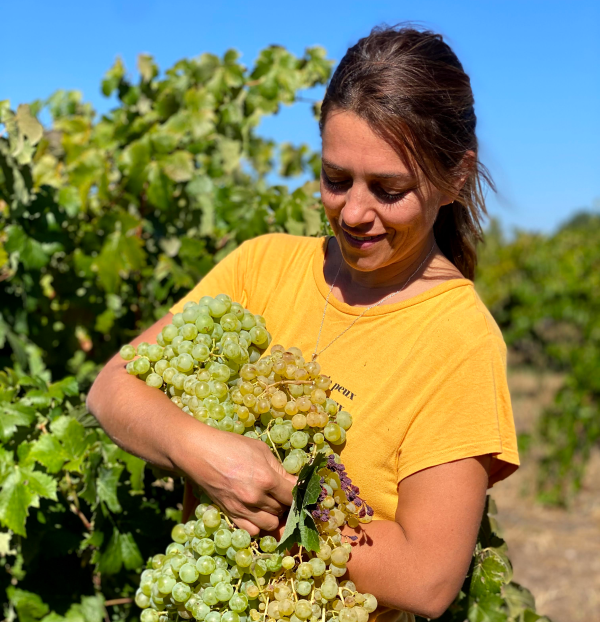
These are lands of vineyards on the southern bank of the Biobío River. In Mapudungun, Millapoa means belly of gold, alluding to the washing places of the precious mineral that abounded in this area. Located 20 kilometers from Nacimiento and 98 kilometers from Concepción, Millapoa was witness to important milestones in the colonial history of our region, since it was in these latitudes, near the gold washings, where the city called Santa Cruz, de Coya was built in 1590, which also gives its name to one of our country wines, founded by Governor Martín García Oñez de Loyola in honor of his wife Doña Beatriz Clara Coya, a beautiful Inca princess. In this place, the vineyards are located on a soil of fine black sands, a consequence of the volcanic explosion of the Antuco massif, some 10 thousand years ago, whose sedimentary material of lava and ashes was displaced by the Biobío River, forming these rich volcanic soils. From here and its 200-year-old vines, wines such as Rivera del Notro Tinto and País Franco are born, while in a nearby vineyard of external production, the Tinto País, Santa Cruz de Coya, is produced.
Carrizal, Nacimiento
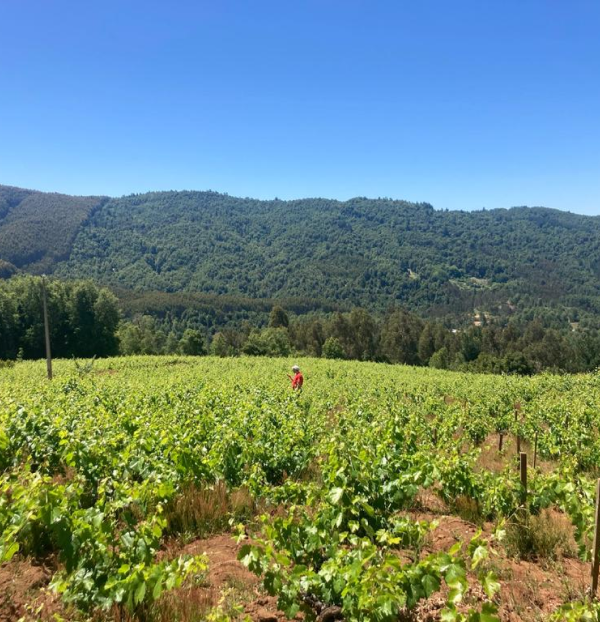
The Carrizal vineyard is located in the Nahuelbuta mountain range, at an altitude of 500 meters above sea level, surrounded by native forests and a distant horizon marked by the Andes Mountain range. Of all our own vineyards, it is the highest, marked by granite soil, which in turn is nourished by the presence of coigües, wild salvias, cinnamon trees and corcolenas, fungi and the humidity of the endemic Nahuelbuta rainforest. From this vineyard, the delicate 200-year-old La Trinchera Mountain.
Palmilla, Nacimiento
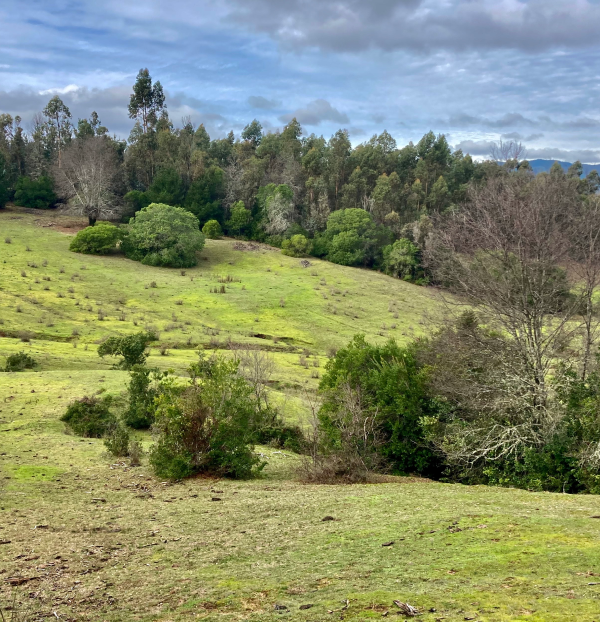
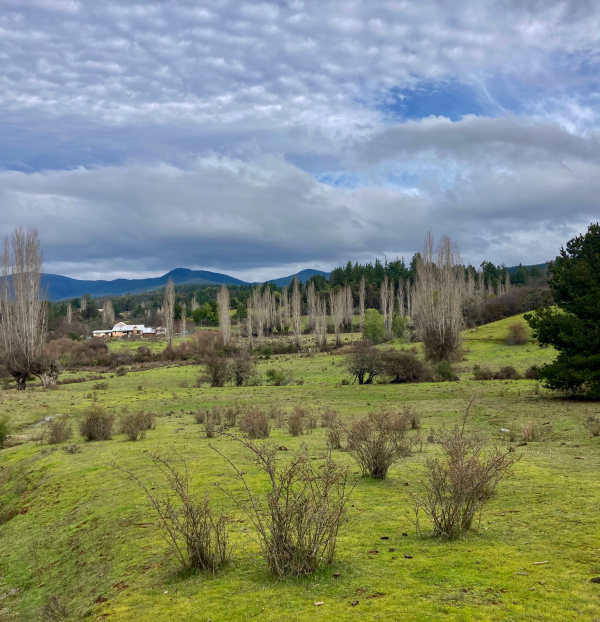
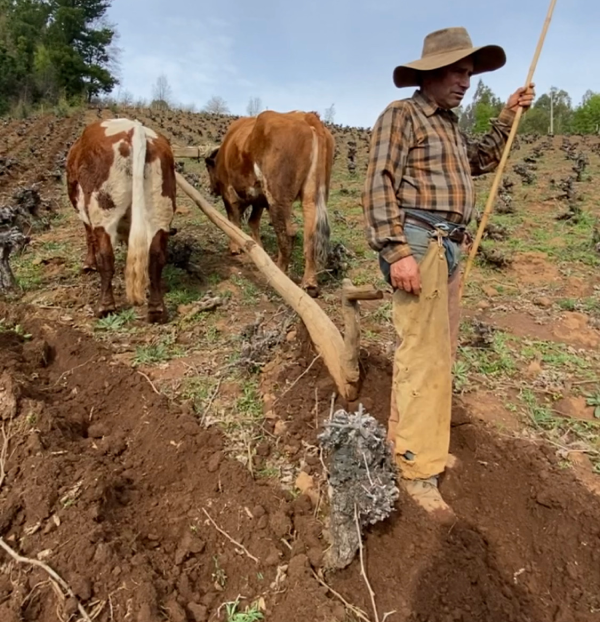
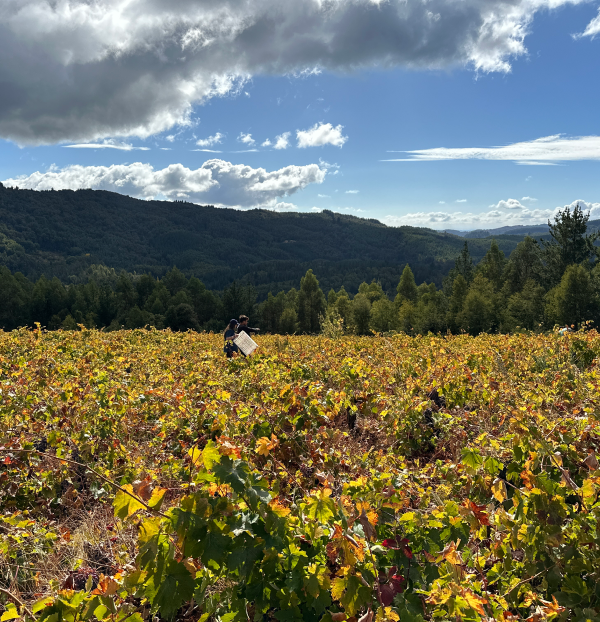
In the foothills of the Nahuelbuta mountain range and about 10 kilometers from the city of Nacimiento is Palmilla. This is a field of gentle hills and an extensive area of wetlands between ravines and a small stream that dries up in summer. Here there is a small abandoned vineyard of País, surrounded by large trees, mostly oaks, which coexist with pines and eucalyptus planted by former owners. This beautiful field is in the process of recovery for future vineyard plantations, in addition to the construction of a cider mill and agricultural work house. In this place, the vineyards are located on a soil of fine black sands, a consequence of the volcanic explosion of the Antuco massif, about 10 thousand years ago, whose sedimentary material of lava and ashes was displaced by the Biobío River, forming these rich volcanic soils. From here and its 200-year-old vines, wines such as Rivera del Notro Tinto and País Franco are born, while in a nearby vineyard of external production, the Tinto País, Santa Cruz de Coya, is produced.